Is Your Teen Running on Empty? How to Spot the Early Signs of Academic Burnout
Is Your Teen Running on Empty? How to Spot the Early Signs of Academic Burnout
Is Your Teen Running on Empty? How to Spot the Early Signs of Academic Burnout

5 mins reading time
5 mins reading time

Quick Summary
Academic burnout is more than exam stress, it's chronic exhaustion that doesn't lift after a break. Watch for persistent fatigue, lost interest in favourite subjects, social withdrawal, mood changes, procrastination, and unexplained physical symptoms. Start with a conversation, not a grade check, and get support early before it shows up on the report card.
Quick Summary
Academic burnout is more than exam stress, it's chronic exhaustion that doesn't lift after a break. Watch for persistent fatigue, lost interest in favourite subjects, social withdrawal, mood changes, procrastination, and unexplained physical symptoms. Start with a conversation, not a grade check, and get support early before it shows up on the report card.
Quick Summary
Academic burnout is more than exam stress, it's chronic exhaustion that doesn't lift after a break. Watch for persistent fatigue, lost interest in favourite subjects, social withdrawal, mood changes, procrastination, and unexplained physical symptoms. Start with a conversation, not a grade check, and get support early before it shows up on the report card.
Parenting a high schooler is a lot. You're watching your teenager carry more than you probably did at their age, and most of the time, they're doing it without complaint.
So when something feels a little off: the dinner table goes quieter, the energy dips, the enthusiasm for school fades; it can be hard to know whether to step in or give them space. You don't want to hover. But you also don't want to miss something important.
If you've been getting that nagging feeling lately, trust it. What you might be noticing are the early signs of academic burnout, and in our experience working with Ontario high school students, it almost always shows up at home before it shows up on a report card.
What Exactly Is Academic Burnout?
Burnout isn't just being tired after a tough week of exams. It's what happens when a student has been pushing hard for so long that they've genuinely run out of fuel emotionally, mentally, and sometimes physically too.
It usually shows up as three things happening together:
Feeling completely drained by school, no matter how much they sleep
Starting to think "what's the point?" about studying or their grades
Feeling like no matter how hard they try, it's never enough
The important thing to understand is that this isn't a character flaw or a discipline problem. Burnout is what happens when a young person has been giving everything they have for too long, and nobody noticed the tank was getting low.
Unlike regular stress, which tends to lift after exams or a school break, burnout doesn't resolve on its own. That's what makes catching it early so important.
Why Ontario High Schoolers Feel So Much Pressure Right Now
High school in Ontario packs a lot into four years. Between OSSD credit requirements, the province-wide literacy and math assessments, and the pressure to maintain strong averages for university admission, there's a lot stacked on your teenager's shoulders.
And here's what makes it harder: the students most at risk of burnout are often the ones working the hardest. The conscientious ones. The ones who don't ask for help because they don't want to seem like they can't handle it.
Add in extracurriculars, part-time jobs, and the noise of social media, and it becomes easy to see why burnout has been rising steadily among high schoolers across the province. According to CAMH's 2023 Ontario Student Drug Use and Health Survey, more than half of students in Grades 7 to 12 reported moderate-to-serious psychological distress - a figure that has doubled over the past decade. These are real kids, in real classrooms, feeling overwhelmed in ways they may not have the words for yet.
6 Early Signs to Watch For at Home
Burnout tends to build quietly, which is why the early signs can feel easy to brush off. Here's what's actually worth paying attention to:
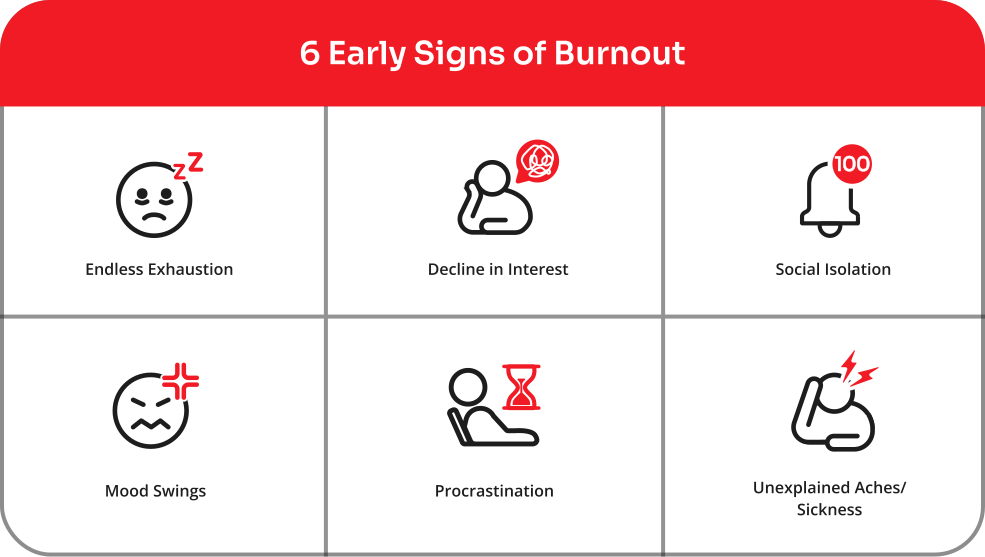
1. They're exhausted, even when they've slept
Not just tired after a late night, but dragging through the day even after a full sleep. If your teen always seems worn out, that persistent, unrefreshing fatigue is your body's way of flagging something deeper than a busy week.
2. They've lost interest in something they used to love
This one is easy to miss. If your son always loved math and now calls it pointless, or your daughter used to look forward to a class and now dreads it - that shift in a once-favourite subject is a meaningful early signal. It tells you the depletion goes deeper than just finding a course difficult.
3. They're pulling back socially
Skipping plans with friends, spending more time alone, not mentioning anyone from school. When teens are burning out, they often go quiet and pull inward. It can look like a bad mood, but underneath it's usually exhaustion, and they may not even fully understand why they're retreating.
4. Their mood has changed noticeably
More irritable than usual, snapping over small things or on the flip side, just flat and low-energy. If you're hearing things like "nothing I do matters," or Sunday evenings have become a source of real dread, please don't write those off as teenage dramatics. They're telling you something.
5. They're procrastinating, a lot
Here's something most parents don't realize: when a burned-out student sits at their desk for two hours and produces nothing, it's usually not laziness. It's anxiety. This kind of procrastination looks like avoidance from the outside, but on the inside, opening the textbook feels so overwhelming that they freeze instead. Your teens are not being irresponsible, they're just stuck, and they often feel ashamed about it too.
6. Unexplained headaches, stomach aches, or getting sick often
Chronic stress has real physical effects. If your teen is frequently under the weather with no clear medical cause, their body may be carrying more than they're letting on. It's worth taking seriously, even if every visit to the doctor comes back fine.
What Can You Do About It?
The most important thing you can do first is create space for an honest conversation and resist the urge to make it about grades. Instead of "Did you finish your homework?", try something like "You seem really drained lately. How are you actually doing?" Let them know you're not there to fix or push, just to listen.
From there, a few things genuinely help:
Sit down together and look at their schedule honestly and give real permission to drop something, without guilt
Protect their sleep. Teens need 8 to 10 hours, and consistent rest makes everything else more manageable
Reach out to their school guidance counsellor early, before things escalate
Take a look at your own habits too. If your household treats busyness as a badge of honour, your teen quietly learns that rest means falling behind
If academic struggles are part of the picture - falling marks, incomplete assignments, feeling lost in a subject - getting the right support early can make a real difference. A tutor who genuinely understands the Ontario Grade 9–12 curriculum can help a student rebuild their confidence and find a sustainable pace again, rather than just scrambling to catch up.
At GOAL Tutoring, we work with Ontario high school students in Grades 9-12 in all core subjects: Math, Sciences, English, and French. If you're worried about your teen and want to talk through what's going on, we're always happy to have that conversation - no pressure, no commitment.
Reach out to us today.
Burnout is so much easier to address when you catch it early. And the fact that you're reading this, paying attention, looking for answers, that already matters more than you know.
Parenting a high schooler is a lot. You're watching your teenager carry more than you probably did at their age, and most of the time, they're doing it without complaint.
So when something feels a little off: the dinner table goes quieter, the energy dips, the enthusiasm for school fades; it can be hard to know whether to step in or give them space. You don't want to hover. But you also don't want to miss something important.
If you've been getting that nagging feeling lately, trust it. What you might be noticing are the early signs of academic burnout, and in our experience working with Ontario high school students, it almost always shows up at home before it shows up on a report card.
What Exactly Is Academic Burnout?
Burnout isn't just being tired after a tough week of exams. It's what happens when a student has been pushing hard for so long that they've genuinely run out of fuel emotionally, mentally, and sometimes physically too.
It usually shows up as three things happening together:
Feeling completely drained by school, no matter how much they sleep
Starting to think "what's the point?" about studying or their grades
Feeling like no matter how hard they try, it's never enough
The important thing to understand is that this isn't a character flaw or a discipline problem. Burnout is what happens when a young person has been giving everything they have for too long, and nobody noticed the tank was getting low.
Unlike regular stress, which tends to lift after exams or a school break, burnout doesn't resolve on its own. That's what makes catching it early so important.
Why Ontario High Schoolers Feel So Much Pressure Right Now
High school in Ontario packs a lot into four years. Between OSSD credit requirements, the province-wide literacy and math assessments, and the pressure to maintain strong averages for university admission, there's a lot stacked on your teenager's shoulders.
And here's what makes it harder: the students most at risk of burnout are often the ones working the hardest. The conscientious ones. The ones who don't ask for help because they don't want to seem like they can't handle it.
Add in extracurriculars, part-time jobs, and the noise of social media, and it becomes easy to see why burnout has been rising steadily among high schoolers across the province. According to CAMH's 2023 Ontario Student Drug Use and Health Survey, more than half of students in Grades 7 to 12 reported moderate-to-serious psychological distress - a figure that has doubled over the past decade. These are real kids, in real classrooms, feeling overwhelmed in ways they may not have the words for yet.
6 Early Signs to Watch For at Home
Burnout tends to build quietly, which is why the early signs can feel easy to brush off. Here's what's actually worth paying attention to:
1. They're exhausted, even when they've slept
Not just tired after a late night, but dragging through the day even after a full sleep. If your teen always seems worn out, that persistent, unrefreshing fatigue is your body's way of flagging something deeper than a busy week.
2. They've lost interest in something they used to love
This one is easy to miss. If your son always loved math and now calls it pointless, or your daughter used to look forward to a class and now dreads it - that shift in a once-favourite subject is a meaningful early signal. It tells you the depletion goes deeper than just finding a course difficult.
3. They're pulling back socially
Skipping plans with friends, spending more time alone, not mentioning anyone from school. When teens are burning out, they often go quiet and pull inward. It can look like a bad mood, but underneath it's usually exhaustion, and they may not even fully understand why they're retreating.
4. Their mood has changed noticeably
More irritable than usual, snapping over small things or on the flip side, just flat and low-energy. If you're hearing things like "nothing I do matters," or Sunday evenings have become a source of real dread, please don't write those off as teenage dramatics. They're telling you something.
5. They're procrastinating, a lot
Here's something most parents don't realize: when a burned-out student sits at their desk for two hours and produces nothing, it's usually not laziness. It's anxiety. This kind of procrastination looks like avoidance from the outside, but on the inside, opening the textbook feels so overwhelming that they freeze instead. Your teens are not being irresponsible, they're just stuck, and they often feel ashamed about it too.
6. Unexplained headaches, stomach aches, or getting sick often
Chronic stress has real physical effects. If your teen is frequently under the weather with no clear medical cause, their body may be carrying more than they're letting on. It's worth taking seriously, even if every visit to the doctor comes back fine.
What Can You Do About It?
The most important thing you can do first is create space for an honest conversation and resist the urge to make it about grades. Instead of "Did you finish your homework?", try something like "You seem really drained lately. How are you actually doing?" Let them know you're not there to fix or push, just to listen.
From there, a few things genuinely help:
Sit down together and look at their schedule honestly and give real permission to drop something, without guilt
Protect their sleep. Teens need 8 to 10 hours, and consistent rest makes everything else more manageable
Reach out to their school guidance counsellor early, before things escalate
Take a look at your own habits too. If your household treats busyness as a badge of honour, your teen quietly learns that rest means falling behind
If academic struggles are part of the picture - falling marks, incomplete assignments, feeling lost in a subject - getting the right support early can make a real difference. A tutor who genuinely understands the Ontario Grade 9–12 curriculum can help a student rebuild their confidence and find a sustainable pace again, rather than just scrambling to catch up.
At GOAL Tutoring, we work with Ontario high school students in Grades 9-12 in all core subjects: Math, Sciences, English, and French. If you're worried about your teen and want to talk through what's going on, we're always happy to have that conversation - no pressure, no commitment.
Reach out to us today.
Burnout is so much easier to address when you catch it early. And the fact that you're reading this, paying attention, looking for answers, that already matters more than you know.
For more expert insights and personalized learning support, explore GOAL Tutoring’s services or read other articles on our website.
For more expert insights and personalized learning support, explore GOAL Tutoring’s services or read other articles on our website.
Get in Touch
Let’s make learning work for you – reach out and build your personalized plan today.
Book a Consultation

Get in Touch
Let’s make learning work for you – reach out and build your personalized plan today.
Book a Consultation
Get in Touch
Let’s make learning work for you – reach out and build your personalized plan today.
Book a Consultation
Get in Touch
Let’s make learning work for you – reach out and build your personalized plan today.
Book a Consultation

Getting Help Made Easier


Get in Touch
+1 (647) 924-5352
info@goal-tutoring.com
5793 Yonge St
North York ON M2M 0A9 Canada
Copyright © 2025 Goal Tutoring. All Rights Reserved.
Getting Help Made Easier
Get in Touch
+1 (647) 924-5352
info@goal-tutoring.com
5793 Yonge St
North York ON M2M 0A9 Canada
Copyright © 2025 Goal Tutoring. All Rights Reserved.
Getting Help Made Easier
Get in Touch
Copyright © 2025 Goal Tutoring. All Rights Reserved.
Getting Help Made Easier
Get in Touch
+1 (647) 924-5352
info@goal-tutoring.com
5793 Yonge St, North York, ON M2M 0A9
Copyright © 2025 Goal Tutoring. All Rights Reserved.