Ontario High School Course Selection: A Parent’s Guide
Ontario High School Course Selection: A Parent’s Guide
Ontario High School Course Selection: A Parent’s Guide

8 mins reading time
8 mins reading time

Quick Summary
This guide helps parents navigate Ontario high school course selection, including course codes, prerequisites, and university requirements. It explains how Academic, Applied, University, College, and Mixed courses impact future opportunities, and offers strategies to keep as many post-secondary doors open as possible. Key tips include prioritizing "U" level English, maintaining math through Grade 11, using electives to explore interests, and leveraging tools like myBlueprint and OUInfo. With careful planning and support, parents can help their teens approach course selection with confidence and flexibility.
Quick Summary
This guide helps parents navigate Ontario high school course selection, including course codes, prerequisites, and university requirements. It explains how Academic, Applied, University, College, and Mixed courses impact future opportunities, and offers strategies to keep as many post-secondary doors open as possible. Key tips include prioritizing "U" level English, maintaining math through Grade 11, using electives to explore interests, and leveraging tools like myBlueprint and OUInfo. With careful planning and support, parents can help their teens approach course selection with confidence and flexibility.
Quick Summary
This guide helps parents navigate Ontario high school course selection, including course codes, prerequisites, and university requirements. It explains how Academic, Applied, University, College, and Mixed courses impact future opportunities, and offers strategies to keep as many post-secondary doors open as possible. Key tips include prioritizing "U" level English, maintaining math through Grade 11, using electives to explore interests, and leveraging tools like myBlueprint and OUInfo. With careful planning and support, parents can help their teens approach course selection with confidence and flexibility.
It's that time of year again. The days are getting a little longer, the snow is (hopefully) starting to melt, and high school students across Ontario are logging into myBlueprint to select their courses for next year. If you're a parent, you might notice a sudden shift in the household atmosphere. There's often a mix of excitement about new electives and genuine anxiety about making the "right" choices.
For many families, February and March feel incredibly high-stakes. High school course selection is no longer about picking interesting classes; it feels like mapping out the rest of your child's life. You might be asking yourself: Is my teen closing doors they don't even know exist yet? Are we making decisions today that will limit their university applications two years from now?
These are valid concerns. The Ontario curriculum offers incredible flexibility, but that flexibility comes with complexity. Navigating course codes, prerequisites, and university admission requirements can feel overwhelming. But take a deep breath. You're not alone in this, and with a bit of strategic planning, you can help your teen build a schedule that keeps their future bright and their options wide open.
Why the February Course Selection Deadline Feels So Heavy
Right now, guidance counsellors are visiting homerooms and course selection sheets are coming due. This deadline feels heavy because it's the first real "fork in the road" for many students. In Grade 9, most students take a fairly standard set of courses. But as they move into Grade 10, and especially Grades 11 and 12, the path diverges significantly.
This period requires students to think backward from a goal they might not even have yet. To get into a specific university programme, they need specific Grade 12 courses. To get into those Grade 12 courses, they need specific Grade 11 prerequisites. It can feel like a domino effect. Not because early choices permanently lock doors, but because senior-level university prerequisites build on earlier courses. Decisions made in Grades 10 and 11 influence which Grade 12 courses are available, which in turn affects university eligibility.
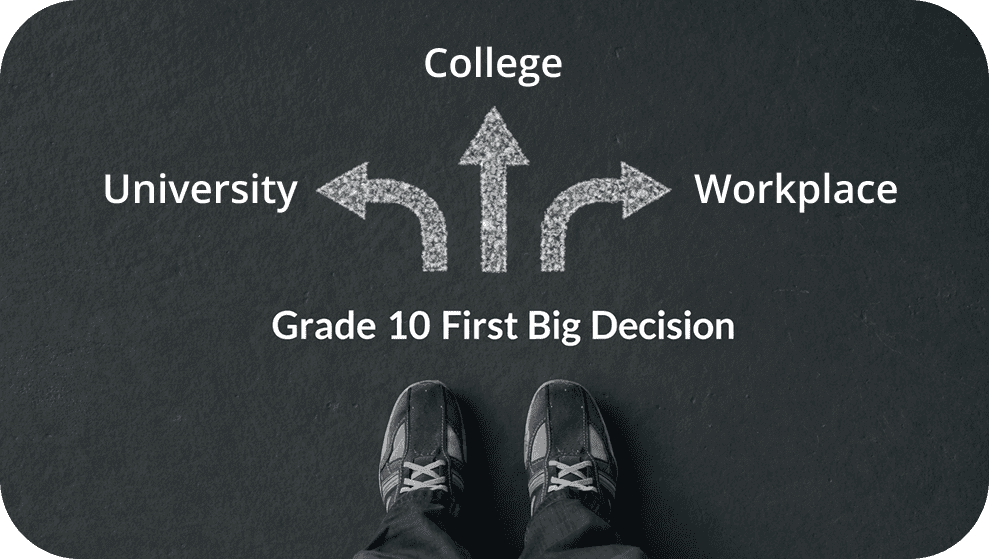
Here's the reassuring part: very few doors close permanently. Ontario's secondary school system is intentionally designed to allow students to change direction. There are summer school options, night school, and upgrading opportunities through providers like TVO ILC. But getting course selection right the first time makes the journey toward an OSSD (Ontario Secondary School Diploma) smoother and far less stressful. The goal isn't to have the next twenty years perfectly mapped out. It's simply to ensure your teen has the keys to as many doors as possible.
Understanding Ontario High School Course Codes
One of the biggest hurdles for parents is deciphering Ontario high school course codes. When you look at a code like ENG3U or MPM2D, those letters and numbers tell a crucial story about where that course leads.
Here's how to read them:
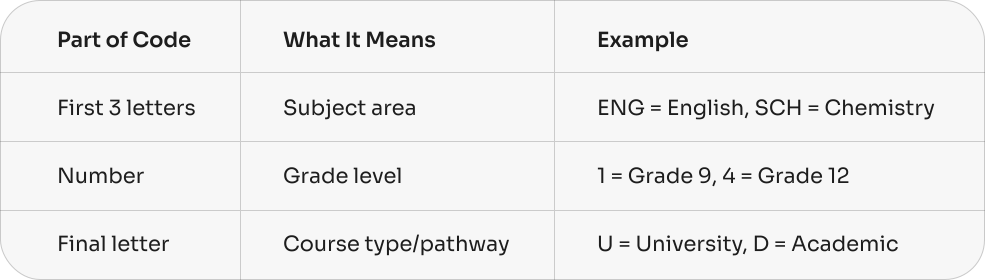
Understanding the difference between course types is vital for long-term planning.
De-Streamed Courses in Grade 9
As of September 2022, Ontario removed Academic and Applied streaming from Grade 9 core subjects. Math (MTH1W), Science (SNC1W), English (ENL1W), and Geography (CGC1W) are now offered as de-streamed courses, marked with a "W" in the course code. This means all Grade 9 students take the same course, giving them more time to develop skills before making pathway decisions.
This change was designed to keep options open longer. Your teen won't need to choose between Academic or Applied until Grade 10.
Academic vs Applied Courses in Grade 10
In Grade 10, the streams reappear. Courses are typically divided into Academic (D) and Applied (P).
Academic (D): These courses focus on theoretical concepts and abstract thinking. They lead to University preparation courses in Grades 11 and 12.
Applied (P): These focus on practical applications and concrete examples. They lead to College preparation courses.
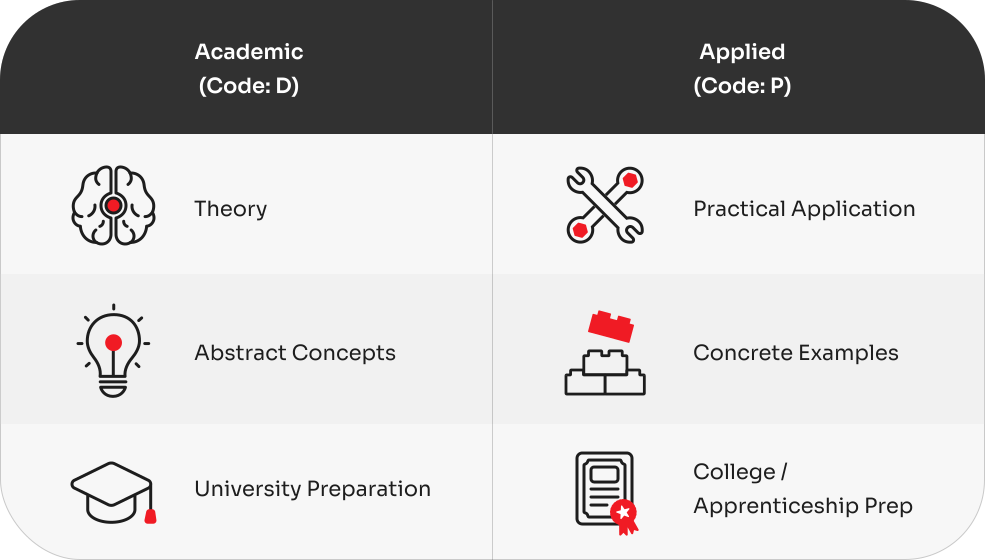
This is where course selection starts to matter. If your teen is considering university, Academic courses in Grade 10 are typically the smoother pathway to "U" level courses in senior years.
University, Mixed, and College Courses in Grades 11 and 12
Once students hit Grade 11, the codes change to reflect post-secondary destinations:
University Preparation (U): Designed to meet entrance requirements for university degree programmes. Most Ontario universities require six Grade 12 "U" or "M" courses for admission.
University/College Preparation (M): Often called "Mixed" courses. Accepted by many universities for specific programmes and also meet college requirements.
College Preparation (C): Designed for college diploma programmes and apprenticeships.
Why this matters: Many competitive programmes (Engineering, Commerce, Nursing) strictly require "U" level courses in specific subjects. Choices made in Grades 10 and 11 directly determine which Grade 12 courses are available. Students who miss a prerequisite may need summer school or upgrading courses to catch up, which is possible but adds time and stress.
Avoiding The "University Trap"
The "University Trap" happens when a capable student unintentionally opts out of a prerequisite course because they "don't like it" or "don't think they'll need it," only to realise later that it's mandatory for their dream programme.
Imagine your teen decides in Grade 10 that they dislike science, so they don't take Grade 11 Chemistry or Physics. Fast forward to Grade 12: they discover a passion for Kinesiology or Nursing. Suddenly, they realise those programmes require Grade 12 Biology and Chemistry. Because they missed the Grade 11 prerequisite, they can't take the Grade 12 course.
This happens most frequently with Math and Science. Here are the specific prerequisites for some of Ontario's most popular university programmes:
Engineering programmes require:
Advanced Functions (MHF4U)
Calculus & Vectors (MCV4U)
Chemistry (SCH4U)
Physics (SPH4U)
Missing even one of these removes Engineering as an option entirely.
Business and Commerce programmes almost always require:
Advanced Functions (MHF4U)
Calculus & Vectors (MCV4U) at most schools
Many students drop math early because it's challenging, unknowingly disqualifying themselves from business schools.
Nursing and Health Sciences programmes typically require:
Grade 12 English (ENG4U)
Biology (SBI4U)
Chemistry (SCH4U)
Sometimes Math
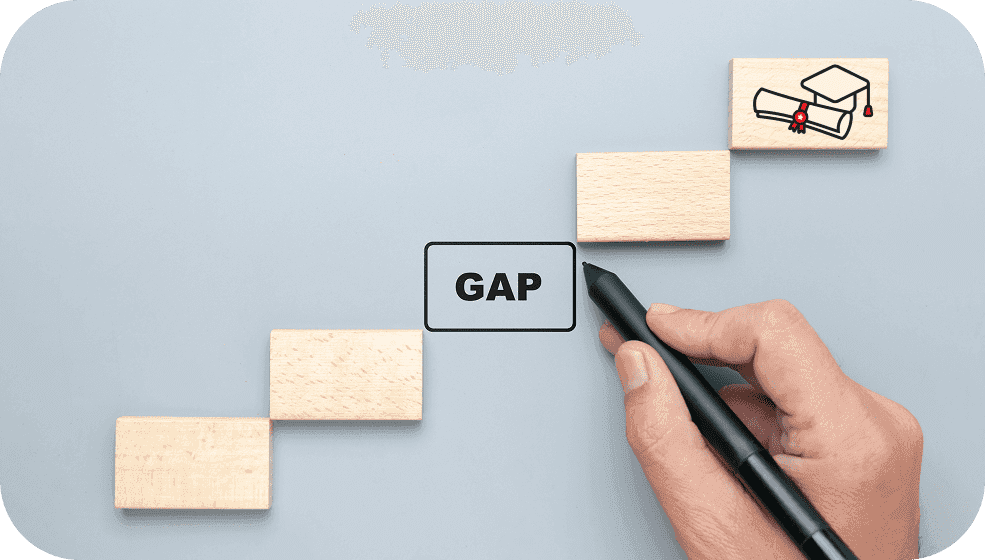
The Ontario Universities' Application Centre (OUAC) is strict about prerequisites. Even if a student has a 95% average in English and History, they cannot be admitted to a Science programme without the required Science credits. You can check specific programme requirements on Ontario Universities' Info (OUInfo).
Five Strategies for Keeping Your Teen's Options Open
If your teen knows exactly what they want to do (perhaps they've wanted to be a graphic designer since they were six) course selection is easier. But for the majority of teenagers who answer "I don't know" when asked about their future, the strategy should focus on maximising potential.
Here's how you can help them keep the most doors open:
1. Prioritise "U" Level English
Grade 12 University English (ENG4U) is required for almost every university programme in Ontario, from Art History to Astrophysics. Regardless of your teen's intended major, they'll need this credit. Encouraging them to stick with the Academic/University stream for English is the single best way to keep university options viable.
2. Don't Drop Math Too Early
Math is often the first subject students want to drop. Keeping math in the timetable through Grade 11 Functions (MCR3U) and ideally Grade 12 keeps doors open for Business, Social Sciences (many require statistics), and unexpected fields like Psychology. Even if your teen is certain they'll pursue arts or humanities, having Grade 11 math completed gives them flexibility if their interests shift.
3. Follow the "One More Than You Need" Rule
If a university programme requires six "U" or "M" courses, encourage your teen to take seven. This provides a safety net. If one course goes poorly or proves too difficult, they have a backup grade to use for their top-six average.
4. Use Electives for Exploration
Encourage your teen to use their electives to try different fields in Grades 10 and 11. An Introduction to Business course, Computer Science, or Media Arts can help clarify interests before the pressure of Grade 12 hits. Electives are low-stakes opportunities to discover what they enjoy.
5. Use myBlueprint and OUInfo for Planning
These free tools are invaluable:
myBlueprint shows how current courses connect to future ones and helps visualise the path to graduation
OUInfo lets you search specific university programmes to see exactly which Grade 12 credits are required
Sit down with your teen and explore these together. Looking up the prerequisites for two or three programmes they're curious about can make course selection feel much more concrete.
What If Your Teen Is Afraid to Take a Difficult Course?
Sometimes a student wants to keep their options open, but they're terrified of the workload. They might say, "I want to be an architect, but I'm not good enough at math to take Grade 11 Functions."
This is where the conversation shifts from selection to support.
Avoiding a necessary course because it feels "too hard" is a decision based on fear, not ability. At GOAL Tutoring, we work with students across Ontario who thought they were "bad at math" or "couldn't handle sciences." What we see, again and again, is that these students absolutely can succeed once they have one-on-one support that adapts to their learning style.
If your teen is on the fence about taking a prerequisite like Grade 11 Physics or Grade 12 Advanced Functions because they're worried about their GPA, we can help bridge that gap.
Confidence Building: We help students realise they're capable of handling "U" level coursework. Often the difference between struggling and succeeding is having someone explain concepts in a way that clicks.
Prerequisite Prep: If they're jumping from Grade 10 to Grade 11, we can review key foundational concepts over the summer so they start the new semester feeling prepared, not behind.
Ontario Curriculum Expertise: Our tutors know the Ontario curriculum inside out. We know exactly what units are coming up and can help your teen stay ahead of the class rather than scrambling to catch up.
Course selection shouldn't be about taking the path of least resistance; it should be about choosing the path that leads to your teen's goals, with the support they need to get there. Whether that means tackling a tough Calculus course or refining essay-writing skills for Grade 12 English, we're here to ensure they don't have to walk that path alone.
Frequently Asked Questions
Can my teen switch from Applied to Academic courses?
Yes, but it usually requires a transfer course or summer school to bridge the gap. For example, a student who took Applied Math in Grade 10 would typically need to complete a transfer course before taking the Academic pathway in Grade 11. It's easier to stay in Academic courses from Grade 10 onward than to switch up later.
How many courses should my teen take in Grade 12?
Most students take six to eight courses. Universities look at your teen's top six "U" or "M" level grades, so taking seven courses gives some breathing room if one doesn't go as planned.
What if my teen has no idea what they want to study?
That's completely normal. The strategy for undecided students is to keep as many doors open as possible by maintaining a balance of English, Math, and at least one Science through Grade 11. This covers prerequisites for the widest range of programmes.
When does course selection happen?
In most Ontario schools, course selection takes place in February and March. Students submit their choices through myBlueprint or a similar tool, which are then reviewed by their guidance counsellor.
What are alternate courses in high school Ontario?
Alternate courses (sometimes called "locally developed" courses) are designed for students who need additional support or who are planning to enter the workforce directly after high school. They don't lead to university or college preparation pathways, so students considering post-secondary education should generally stick with Academic, Applied, or Open courses.
Moving Forward with Confidence
As you sit down with your teen to review their choices, listen to their worries. Validate that this feels like a big decision. But remind them that no decision is fatal, and support is available.
By choosing a balanced mix of courses and sticking with key prerequisites, your teen is buying themselves the most valuable asset of all: choice. When Grade 12 graduation rolls around, they won't just be finishing high school; they'll be stepping into a future where they have the freedom to pursue whatever passion they've discovered along the way.
We'll be here to help make sure they're ready for it.
It's that time of year again. The days are getting a little longer, the snow is (hopefully) starting to melt, and high school students across Ontario are logging into myBlueprint to select their courses for next year. If you're a parent, you might notice a sudden shift in the household atmosphere. There's often a mix of excitement about new electives and genuine anxiety about making the "right" choices.
For many families, February and March feel incredibly high-stakes. High school course selection is no longer about picking interesting classes; it feels like mapping out the rest of your child's life. You might be asking yourself: Is my teen closing doors they don't even know exist yet? Are we making decisions today that will limit their university applications two years from now?
These are valid concerns. The Ontario curriculum offers incredible flexibility, but that flexibility comes with complexity. Navigating course codes, prerequisites, and university admission requirements can feel overwhelming. But take a deep breath. You're not alone in this, and with a bit of strategic planning, you can help your teen build a schedule that keeps their future bright and their options wide open.
Why the February Course Selection Deadline Feels So Heavy
Right now, guidance counsellors are visiting homerooms and course selection sheets are coming due. This deadline feels heavy because it's the first real "fork in the road" for many students. In Grade 9, most students take a fairly standard set of courses. But as they move into Grade 10, and especially Grades 11 and 12, the path diverges significantly.
This period requires students to think backward from a goal they might not even have yet. To get into a specific university programme, they need specific Grade 12 courses. To get into those Grade 12 courses, they need specific Grade 11 prerequisites. It can feel like a domino effect. Not because early choices permanently lock doors, but because senior-level university prerequisites build on earlier courses. Decisions made in Grades 10 and 11 influence which Grade 12 courses are available, which in turn affects university eligibility.
Here's the reassuring part: very few doors close permanently. Ontario's secondary school system is intentionally designed to allow students to change direction. There are summer school options, night school, and upgrading opportunities through providers like TVO ILC. But getting course selection right the first time makes the journey toward an OSSD (Ontario Secondary School Diploma) smoother and far less stressful. The goal isn't to have the next twenty years perfectly mapped out. It's simply to ensure your teen has the keys to as many doors as possible.
Understanding Ontario High School Course Codes
One of the biggest hurdles for parents is deciphering Ontario high school course codes. When you look at a code like ENG3U or MPM2D, those letters and numbers tell a crucial story about where that course leads.
Here's how to read them:
Understanding the difference between course types is vital for long-term planning.
De-Streamed Courses in Grade 9
As of September 2022, Ontario removed Academic and Applied streaming from Grade 9 core subjects. Math (MTH1W), Science (SNC1W), English (ENL1W), and Geography (CGC1W) are now offered as de-streamed courses, marked with a "W" in the course code. This means all Grade 9 students take the same course, giving them more time to develop skills before making pathway decisions.
This change was designed to keep options open longer. Your teen won't need to choose between Academic or Applied until Grade 10.
Academic vs Applied Courses in Grade 10
In Grade 10, the streams reappear. Courses are typically divided into Academic (D) and Applied (P).
Academic (D): These courses focus on theoretical concepts and abstract thinking. They lead to University preparation courses in Grades 11 and 12.
Applied (P): These focus on practical applications and concrete examples. They lead to College preparation courses.
This is where course selection starts to matter. If your teen is considering university, Academic courses in Grade 10 are typically the smoother pathway to "U" level courses in senior years.
University, Mixed, and College Courses in Grades 11 and 12
Once students hit Grade 11, the codes change to reflect post-secondary destinations:
University Preparation (U): Designed to meet entrance requirements for university degree programmes. Most Ontario universities require six Grade 12 "U" or "M" courses for admission.
University/College Preparation (M): Often called "Mixed" courses. Accepted by many universities for specific programmes and also meet college requirements.
College Preparation (C): Designed for college diploma programmes and apprenticeships.
Why this matters: Many competitive programmes (Engineering, Commerce, Nursing) strictly require "U" level courses in specific subjects. Choices made in Grades 10 and 11 directly determine which Grade 12 courses are available. Students who miss a prerequisite may need summer school or upgrading courses to catch up, which is possible but adds time and stress.
Avoiding The "University Trap"
The "University Trap" happens when a capable student unintentionally opts out of a prerequisite course because they "don't like it" or "don't think they'll need it," only to realise later that it's mandatory for their dream programme.
Imagine your teen decides in Grade 10 that they dislike science, so they don't take Grade 11 Chemistry or Physics. Fast forward to Grade 12: they discover a passion for Kinesiology or Nursing. Suddenly, they realise those programmes require Grade 12 Biology and Chemistry. Because they missed the Grade 11 prerequisite, they can't take the Grade 12 course.
This happens most frequently with Math and Science. Here are the specific prerequisites for some of Ontario's most popular university programmes:
Engineering programmes require:
Advanced Functions (MHF4U)
Calculus & Vectors (MCV4U)
Chemistry (SCH4U)
Physics (SPH4U)
Missing even one of these removes Engineering as an option entirely.
Business and Commerce programmes almost always require:
Advanced Functions (MHF4U)
Calculus & Vectors (MCV4U) at most schools
Many students drop math early because it's challenging, unknowingly disqualifying themselves from business schools.
Nursing and Health Sciences programmes typically require:
Grade 12 English (ENG4U)
Biology (SBI4U)
Chemistry (SCH4U)
Sometimes Math
The Ontario Universities' Application Centre (OUAC) is strict about prerequisites. Even if a student has a 95% average in English and History, they cannot be admitted to a Science programme without the required Science credits. You can check specific programme requirements on Ontario Universities' Info (OUInfo).
Five Strategies for Keeping Your Teen's Options Open
If your teen knows exactly what they want to do (perhaps they've wanted to be a graphic designer since they were six) course selection is easier. But for the majority of teenagers who answer "I don't know" when asked about their future, the strategy should focus on maximising potential.
Here's how you can help them keep the most doors open:
1. Prioritise "U" Level English
Grade 12 University English (ENG4U) is required for almost every university programme in Ontario, from Art History to Astrophysics. Regardless of your teen's intended major, they'll need this credit. Encouraging them to stick with the Academic/University stream for English is the single best way to keep university options viable.
2. Don't Drop Math Too Early
Math is often the first subject students want to drop. Keeping math in the timetable through Grade 11 Functions (MCR3U) and ideally Grade 12 keeps doors open for Business, Social Sciences (many require statistics), and unexpected fields like Psychology. Even if your teen is certain they'll pursue arts or humanities, having Grade 11 math completed gives them flexibility if their interests shift.
3. Follow the "One More Than You Need" Rule
If a university programme requires six "U" or "M" courses, encourage your teen to take seven. This provides a safety net. If one course goes poorly or proves too difficult, they have a backup grade to use for their top-six average.
4. Use Electives for Exploration
Encourage your teen to use their electives to try different fields in Grades 10 and 11. An Introduction to Business course, Computer Science, or Media Arts can help clarify interests before the pressure of Grade 12 hits. Electives are low-stakes opportunities to discover what they enjoy.
5. Use myBlueprint and OUInfo for Planning
These free tools are invaluable:
myBlueprint shows how current courses connect to future ones and helps visualise the path to graduation
OUInfo lets you search specific university programmes to see exactly which Grade 12 credits are required
Sit down with your teen and explore these together. Looking up the prerequisites for two or three programmes they're curious about can make course selection feel much more concrete.
What If Your Teen Is Afraid to Take a Difficult Course?
Sometimes a student wants to keep their options open, but they're terrified of the workload. They might say, "I want to be an architect, but I'm not good enough at math to take Grade 11 Functions."
This is where the conversation shifts from selection to support.
Avoiding a necessary course because it feels "too hard" is a decision based on fear, not ability. At GOAL Tutoring, we work with students across Ontario who thought they were "bad at math" or "couldn't handle sciences." What we see, again and again, is that these students absolutely can succeed once they have one-on-one support that adapts to their learning style.
If your teen is on the fence about taking a prerequisite like Grade 11 Physics or Grade 12 Advanced Functions because they're worried about their GPA, we can help bridge that gap.
Confidence Building: We help students realise they're capable of handling "U" level coursework. Often the difference between struggling and succeeding is having someone explain concepts in a way that clicks.
Prerequisite Prep: If they're jumping from Grade 10 to Grade 11, we can review key foundational concepts over the summer so they start the new semester feeling prepared, not behind.
Ontario Curriculum Expertise: Our tutors know the Ontario curriculum inside out. We know exactly what units are coming up and can help your teen stay ahead of the class rather than scrambling to catch up.
Course selection shouldn't be about taking the path of least resistance; it should be about choosing the path that leads to your teen's goals, with the support they need to get there. Whether that means tackling a tough Calculus course or refining essay-writing skills for Grade 12 English, we're here to ensure they don't have to walk that path alone.
Frequently Asked Questions
Can my teen switch from Applied to Academic courses?
Yes, but it usually requires a transfer course or summer school to bridge the gap. For example, a student who took Applied Math in Grade 10 would typically need to complete a transfer course before taking the Academic pathway in Grade 11. It's easier to stay in Academic courses from Grade 10 onward than to switch up later.
How many courses should my teen take in Grade 12?
Most students take six to eight courses. Universities look at your teen's top six "U" or "M" level grades, so taking seven courses gives some breathing room if one doesn't go as planned.
What if my teen has no idea what they want to study?
That's completely normal. The strategy for undecided students is to keep as many doors open as possible by maintaining a balance of English, Math, and at least one Science through Grade 11. This covers prerequisites for the widest range of programmes.
When does course selection happen?
In most Ontario schools, course selection takes place in February and March. Students submit their choices through myBlueprint or a similar tool, which are then reviewed by their guidance counsellor.
What are alternate courses in high school Ontario?
Alternate courses (sometimes called "locally developed" courses) are designed for students who need additional support or who are planning to enter the workforce directly after high school. They don't lead to university or college preparation pathways, so students considering post-secondary education should generally stick with Academic, Applied, or Open courses.
Moving Forward with Confidence
As you sit down with your teen to review their choices, listen to their worries. Validate that this feels like a big decision. But remind them that no decision is fatal, and support is available.
By choosing a balanced mix of courses and sticking with key prerequisites, your teen is buying themselves the most valuable asset of all: choice. When Grade 12 graduation rolls around, they won't just be finishing high school; they'll be stepping into a future where they have the freedom to pursue whatever passion they've discovered along the way.
We'll be here to help make sure they're ready for it.
For more expert insights and personalized learning support, explore GOAL Tutoring’s services or read other articles on our website.
For more expert insights and personalized learning support, explore GOAL Tutoring’s services or read other articles on our website.
Get in Touch
Let’s make learning work for you – reach out and build your personalized plan today.
Book a Consultation

Get in Touch
Let’s make learning work for you – reach out and build your personalized plan today.
Book a Consultation
Get in Touch
Let’s make learning work for you – reach out and build your personalized plan today.
Book a Consultation
Get in Touch
Let’s make learning work for you – reach out and build your personalized plan today.
Book a Consultation

Getting Help Made Easier


Get in Touch
+1 (647) 924-5352
info@goal-tutoring.com
5793 Yonge St
North York ON M2M 0A9 Canada
Copyright © 2025 Goal Tutoring. All Rights Reserved.
Getting Help Made Easier
Get in Touch
+1 (647) 924-5352
info@goal-tutoring.com
5793 Yonge St
North York ON M2M 0A9 Canada
Copyright © 2025 Goal Tutoring. All Rights Reserved.
Getting Help Made Easier
Get in Touch
Copyright © 2025 Goal Tutoring. All Rights Reserved.
Getting Help Made Easier
Get in Touch
+1 (647) 924-5352
info@goal-tutoring.com
5793 Yonge St, North York, ON M2M 0A9
Copyright © 2025 Goal Tutoring. All Rights Reserved.